
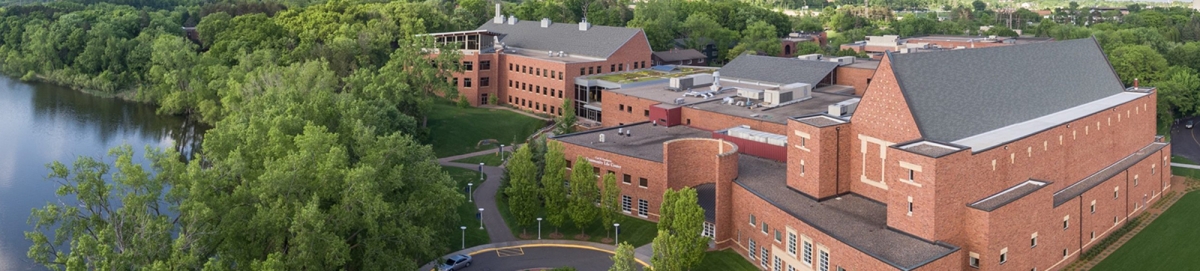

Banner Image For Bethel University

3900 Bethel Drive
St. Paul, MN 55112
United States

Certificates / Diplomas
Associate Degree
Bachelor's Degree
Graduate (Certificates and Degrees)
Bethel University is a leader in Christian higher education with around 4,400 students from 48 states and 29 countries enrolled in undergraduate, graduate,
seminary, and adult education programs. Based in St. Paul, MN, Bethel offers bachelors, masters, and doctoral degrees in approximately 80 relevant fields. We've been a leader and model in Christian higher education since 1871. For generations, our fusion of evangelical faith with top-ranked academics has transformed women and men, preparing them for unique callings in the kingdom of God. A Bethel education prepares students to follow their dreams, do work that matters, and live with purpose so they can make a difference in their careers, their communities, and our world. We are a community of gracious servants, compassionate friends, and diligent scholars who are confident in our abilities and humble in our faith. Popular programs for undergraduates include business, education, nursing, biological sciences and biokinetics. The Department of Physics and Engineering has a tradition of excellence and a strong national reputation while offering majors in Applied Physics and Physics, as well as in such standalone programs as Computer Engineering, Electrical
Engineering, Mechanical Engineering and Software Engineering. Bethel’s B.S. in biokinetics meets a growing need in the marketplace and features the Exercise
Medicine and Prevention Center, giving students hands-on laboratory experience. Bethel is highly ranked nationally for the percentage of students participating in
study abroad programs, with many options for off-campus study. Adult undergraduate students enroll in convenient evening and online degree-completion
programs in fields like nursing and business. Graduate programs train leaders in healthcare, education, and business, including the M.S. in Medical Sciences, the M.A. in Special Education and the MBA. Bethel Seminary is among the 15 largest accredited seminaries in the United States and offers programs that blend online learning with week-long classroom intensives, making them a popular option for students serving throughout the country and the world. The Master of Arts, Master of Divinity, and Doctor of Ministry degree programs focus on developing whole leaders who are prepared to serve wherever they are called. For more information about Bethel University, visit www.bethel.edu.
The following information should help you understand the cost of attending college. Keep in mind that most students receive a financial aid package (grants and scholarships) which lowers their out-of-pocket cost. This is reflected on the net price information, if available.
Living On-Campus
59,390
Living Off-Campus
60,430
Living with Family
55,444
The amounts above pertain to first-time full-time undergraduate students and include tuition and fees, housing and meals, transportation, and personal expenses. Use these estimated amounts as a reference for building your annual budget for attending this institution.
Average Net Price $30,375 / year

This is the average annual amount that first-time, full-time undergraduate students pay at this institution after subtracting all grants and scholarships from the cost of attendance.

Show Net Price details
Net cost after grants and scholarships by income
$0-$30,000: $22,031
$30,001-$48,000: $20,796
$48,001-$75,000: $22,279
$75,001-$110,000: $27,603
Over $110,000: $33,418

This net price data shows the average amount students have paid, according to their family income, after subtracting all grants and scholarships.

Student/Faculty Ratio
14:1
Size of Student Body
4,006
Average Class Size
18
Graduate Students Enrolled
1,344
Show Undergraduate Student Body details
Breakdown by Race
Black or African American: 6%
Hispanic: 7%
Asian: 5%
White: 74%
Two or more races: 3%
Unknown: 4%
Breakdown by Age
19 and Younger: 40%
20 to 24: 49%
25 to 34: 5%
35 to 44: 4%
45 and Older: 3%
Breakdown by Gender
Men: 43%
Women: 57%
New entering students who are transfers
19%

Graduation Rate for Four-Year Programs
75%
Show Graduation Rate 4-yr Institution details
Completers within 6 years by race
American Indian or Alaska Native: 50%
Black or African American: 44%
Hispanic: 59%
Asian: 75%
White: 78%
Two or more races: 71%
Unknown: 79%
Completers within 6 years by gender
Men: 74%
Women: 76%
Retention Rate
83%
Show Retention Rate details
Retention Rate By Type
Full-time: 87%
Part-time: 40%
Suburban
Average amount of federal, state, local, institutional or other sources of grant aid awarded to undergraduate students
$22,134

The following information pertains to first-time full-time undergraduate students.

Show Financial Aid details
Average amount of aid awarded to full-time first-time undergraduates
State/Local grant aid: $5,452
Institutional grant aid: $20,462
Federal grant aid: $4,881
Average amount of grant aid awarded by income (all sources)
$0-$30,000: $32,844
$30,001-$48,000: $30,339
$48,001-$75,000: $32,179
$75,001-$110,000: $27,095
Over $110,000: $21,026
School Scholarships
Yes
Required Financial Aid Application(s):
Title IV (FAFSA) School Code:
002338
Financial Aid Contact

This section shows the median debt graduates incurred to complete their degree at this institution.

Median Cumulative Debt by Degree Type
  • Bachelor's Degree: $27,000
  • Master's Degree: $43,688
  • Doctorate: $43,204
Percent of Graduates With Loans
  • Bachelor's Degree: 70%
  • Master's Degree: 61%
  • Doctorate: 55%

  • Common applications (online)
  • School applications (online)
  • ACT or SAT
  • CLT. We are also Test Optional.
  • High School Diploma or GED
  • Transcripts
  • Application Essay
  • Names of references will be contacted as necessary.
  • Accepts dual credits
  • Accepts exam-based credits
  • Institution awards credits for military training
Application Timelines

Applications Deadline

Rolling admissions; majority of students are admitted by November 1st or March 1st

Rolling Admissions Deadline

n/a

Financial Aid Application Deadline

Varies. * Physics and Engineering Scholarship application due January 15 * Arts and Humanities Scholarship application due January 15 *

Admissions Contact
The data displayed below comes from the Graduate Employment Outcomes tool and only reports on graduates employed in Minnesota. This section shows employment data for graduate class of 2020, including percent of graduates with full-time employment in the 3rd year after college graduation and the median annual wages by award level, according to the Minnesota unemployment insurance records. Data does not include federal employees, self-employed (e.g. professional freelancers, artists, developers, designers, business owners), military, or individuals who moved out of state for a job. The list below may be incomplete and limited to some majors. Additionally, data has been suppressed when it refers to 10 or less students.Jump to:
Bachelor's Degree
Field of Study Percent Employed Full-time 3 Years Post-Graduation Median Annual Salary of Graduates
Biological and biomedical sciences 38% $51,859
Social sciences 61% $55,894
This profile features institution-wide data. Be aware that some categories may not be showing and that data is suppressed when reporting is for 10 or less students. Most data and terminology is sourced from IPEDS. To learn more about each section, please refer to Data Sources. The College Search Tool provides information and reported data for postsecondary institutions in Minnesota that receive federal and state financial aid. For licensed occupational training providers in Minnesota, please visit OHE's Licensed Career Schools.