
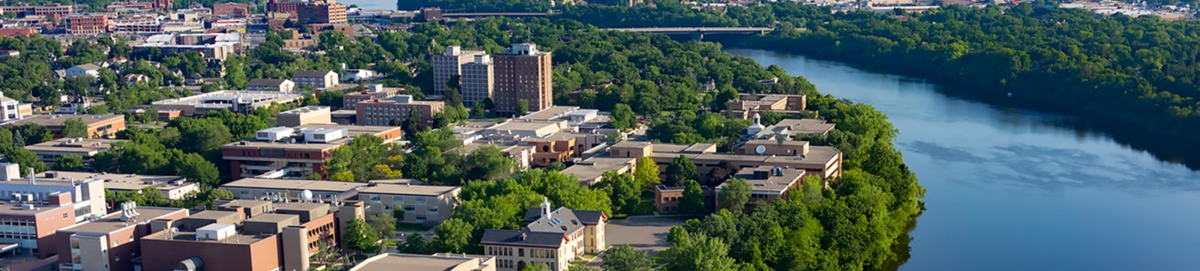

Banner Image For St. Cloud State University

720 4th Avenue South
St. Cloud, MN 56301-4498
United States

Bachelor's Degree
Graduate (Certificates and Degrees)
At St. Cloud State University, we’ve redefined what it means to be a state university and have made bold and innovative changes to how we serve our students, resulting in a richer, rewarding and more holistic learning experience from day one. Our Husky Experience is what truly sets St. Cloud State apart. We provide individualized support combined with a world-class education that equips graduates with the tools and skills needed to succeed in today’s ever-changing world. Join our inclusive and vibrant campus community where you’ll have the opportunity to learn from, and conduct research alongside professors who are also renowned researchers in their fields. With more than 200 undergraduate programs of study and more than 60 graduate programs, holding nearly every available national accreditation, you can design an educational experience like none other — and one that is centered around you. Engage in our campus traditions and activities that form the bonds that bring us together as a strong Husky community.
The following information should help you understand the cost of attending college. Keep in mind that most students receive a financial aid package (grants and scholarships) which lowers their out-of-pocket cost. This is reflected on the net price information, if available.
Living On-Campus
28,412
Living Off-Campus
28,412
Living with Family
22,462
The amounts above pertain to first-time full-time undergraduate students and include tuition and fees, housing and meals, transportation, and personal expenses. Use these estimated amounts as a reference for building your annual budget for attending this institution.
Average Net Price $14,648 / year

This is the average annual amount that first-time, full-time undergraduate students pay at this institution after subtracting all grants and scholarships from the cost of attendance.

Show Net Price details
Net cost after grants and scholarships by income
$0-$30,000: $9,772
$30,001-$48,000: $10,298
$48,001-$75,000: $13,125
$75,001-$110,000: $17,908
Over $110,000: $20,104

This net price data shows the average amount students have paid, according to their family income, after subtracting all grants and scholarships.

Student/Faculty Ratio
20:1
Size of Student Body
10,742
Average Class Size
18
Graduate Students Enrolled
1,795
Show Undergraduate Student Body details
Breakdown by Race
Black or African American: 13%
Hispanic: 6%
Asian: 4%
White: 61%
Two or more races: 4%
International Students: 12%
Unknown: 1%
Breakdown by Age
19 and Younger: 26%
20 to 24: 53%
25 to 34: 14%
35 to 44: 4%
45 and Older: 2%
Breakdown by Gender
Men: 47%
Women: 53%
New entering students who are transfers
40%

Graduation Rate for Four-Year Programs
47%
Show Graduation Rate 4-yr Institution details
Completers within 6 years by race
Black or African American: 37%
Hispanic: 31%
Asian: 38%
White: 51%
Two or more races: 31%
Unknown: 80%
Completers within 6 years by gender
Men: 42%
Women: 51%
Retention Rate
67%
Show Retention Rate details
Retention Rate By Type
Full-time: 68%
Part-time: 44%
Suburban
Average amount of federal, state, local, institutional or other sources of grant aid awarded to undergraduate students
$5,564

The following information pertains to first-time full-time undergraduate students.

Show Financial Aid details
Average amount of aid awarded to full-time first-time undergraduates
State/Local grant aid: $3,049
Institutional grant aid: $3,112
Federal grant aid: $2,597
Average amount of grant aid awarded by income (all sources)
$0-$30,000: $9,785
$30,001-$48,000: $9,077
$48,001-$75,000: $7,837
$75,001-$110,000: $3,822
Over $110,000: $1,254
School Scholarships
Yes
Required Financial Aid Application(s):
Financial Aid Application Deadline(s):

First-year students must be admitted before March 1st to be considered for academic scholarships, which are awarded through the Office of Admissions. No additional application required. Endowed scholarships may require additional application information.

Title IV (FAFSA) School Code:
002377
Financial Aid Contact

This section shows the median debt graduates incurred to complete their degree at this institution.

Median Cumulative Debt by Degree Type
  • Associate's Degree: $17,500
  • Bachelor's Degree: $24,034
  • Graduate Certificate: $20,500
  • Master's Degree: $31,411
  • Doctorate: $40,052
Percent of Graduates With Loans
  • Associate's Degree: 18%
  • Bachelor's Degree: 57%
  • Graduate Certificate: 56%
  • Master's Degree: 37%
  • Doctorate: 53%

Application Fee
$0
  • System applications (online)
  • System applications (paper)
  • School applications (online)
  • School applications (paper)
  • Either ACT or SAT
  • High School Diploma or GED
  • Transcripts
  • Accepts dual credits
  • Accepts exam-based credits
  • Institution awards credits for military training
Application Timelines

Rolling Admissions Deadline

Fall and Spring, Two weeks prior to classes beginning

Financial Aid Application Deadline

First-year students must be admitted before March 1st to be considered for academic scholarships, which are awarded through the Office of Admissions. No additional application required. Endowed scholarships may require additional application information.

Admissions Contact
The data displayed below comes from the Graduate Employment Outcomes tool and only reports on graduates employed in Minnesota. This section shows employment data for graduate class of 2020, including percent of graduates with full-time employment in the 3rd year after college graduation and the median annual wages by award level, according to the Minnesota unemployment insurance records. Data does not include federal employees, self-employed (e.g. professional freelancers, artists, developers, designers, business owners), military, or individuals who moved out of state for a job. The list below may be incomplete and limited to some majors. Additionally, data has been suppressed when it refers to 10 or less students.Jump to:
Bachelor's Degree
Field of Study Percent Employed Full-time 3 Years Post-Graduation Median Annual Salary of Graduates
Accounting and Related Services 77% $72,147
Biological and biomedical sciences 51% $57,124
Biology, General 47% $58,329
Business Administration, Management and Operations 54% $63,581
Business, management, marketing, and related support services 59% $64,444
Business/Commerce, General 69% $61,912
Clinical, Counseling and Applied Psychology 47% $59,227
Clinical/Medical Laboratory Science/Research and Allied Professions 71% $81,792
Communication and Media Studies 59% $49,460
Communication, journalism, and related programs 59% $49,460
Computer and information sciences and support services 68% $68,680
Computer Engineering 75% $95,915
Computer Science 74% $67,907
Computer/Information Technology Administration and Management 65% $69,337
Criminal Justice and Corrections 67% $73,715
Education 19% $55,496
Engineering 74% $83,767
Engineering Technology, General 79% $79,259
Finance and Financial Management Services 60% $61,939
Health Services/Allied Health/Health Sciences, General 46% $79,927
Homeland security, law enforcement, firefighting and related protective services 67% $73,715
Human Services, General 57% $55,511
Industrial Production Technologies/Technicians 75% $76,138
Marketing 47% $60,460
Mechanical Engineering 77% $80,669
Multi-/Interdisciplinary Studies, General 45% $63,672
Multi/Interdisciplinary Studies, Other 46% $63,674
Physical sciences 72% $60,680
Psychology 45% $57,039
Psychology, General 43% $54,435
Registered Nursing, Nursing Administration, Nursing Research and Clinical Nursing 45% $86,536
Social sciences 54% $53,438
Social Work 57% $55,511
Teacher Education and Professional Development, Specific Levels and Methods 18% $47,497
Teacher Education and Professional Development, Specific Subject Areas 22% $62,738
Visual and performing arts 34% $47,524
Graduate (Certificates and Degrees)
Field of Study Percent Employed Full-time 3 Years Post-Graduation Median Annual Salary of Graduates
Biomedical/Medical Engineering 75% $99,502
Business Administration, Management and Operations 73% $125,414
Business, management, marketing, and related support services 73% $123,869
Clinical, Counseling and Applied Psychology 61% $61,047
Computer and information sciences and support services 67% $99,545
Education 31% $76,758
Educational Administration and Supervision 57% $106,152
Engineering 67% $108,371
Engineering technologies and engineering-related fields 57% $103,311
Engineering-Related Fields 57% $103,311
Health professions and related programs 51% $80,160
Human Services, General 58% $69,271
Medical Clinical Sciences/Graduate Medical Studies 68% $85,928
Psychology 61% $61,047
Social Work 54% $67,391
This profile features institution-wide data. Be aware that some categories may not be showing and that data is suppressed when reporting is for 10 or less students. Most data and terminology is sourced from IPEDS. To learn more about each section, please refer to Data Sources. The College Search Tool provides information and reported data for postsecondary institutions in Minnesota that receive federal and state financial aid. For licensed occupational training providers in Minnesota, please visit OHE's Licensed Career Schools.